


Understanding Good Agricultural Practices (GAP)

Good Agricultural Practices (GAP) help ensure that agricultural produce meets recognised standards for safety, is free from harmful pests, and delivers quality that meets consumer expectations.

Key Principles of Good Agricultural Practices (GAP)
- Agricultural chemicals, chemical fertilisers, and plant hormones must be used correctly, responsibly, and safely.
- The use of agricultural hazardous substances classified as Category 4 hazardous substances is strictly prohibited. These substances may not be manufactured, imported, exported, or possessed. A total of 98 substances are listed under the Ministry of Industry’s official notification on hazardous substances.
- Only legally registered agricultural hazardous substances may be used. Product labels must be read carefully, and all instructions, recommended application rates, and safety precautions must be followed strictly.


Eligibility Requirements for Good Agricultural Practices (GAP) Certification
• Be the owner, legal occupier, or authorised tenant of the agricultural production area.
• Be officially registered in Thailand’s civil registration system under the Department of Provincial Administration, Ministry of Interior.
• Have no record of GAP certification being revoked by the Department of Agriculture.

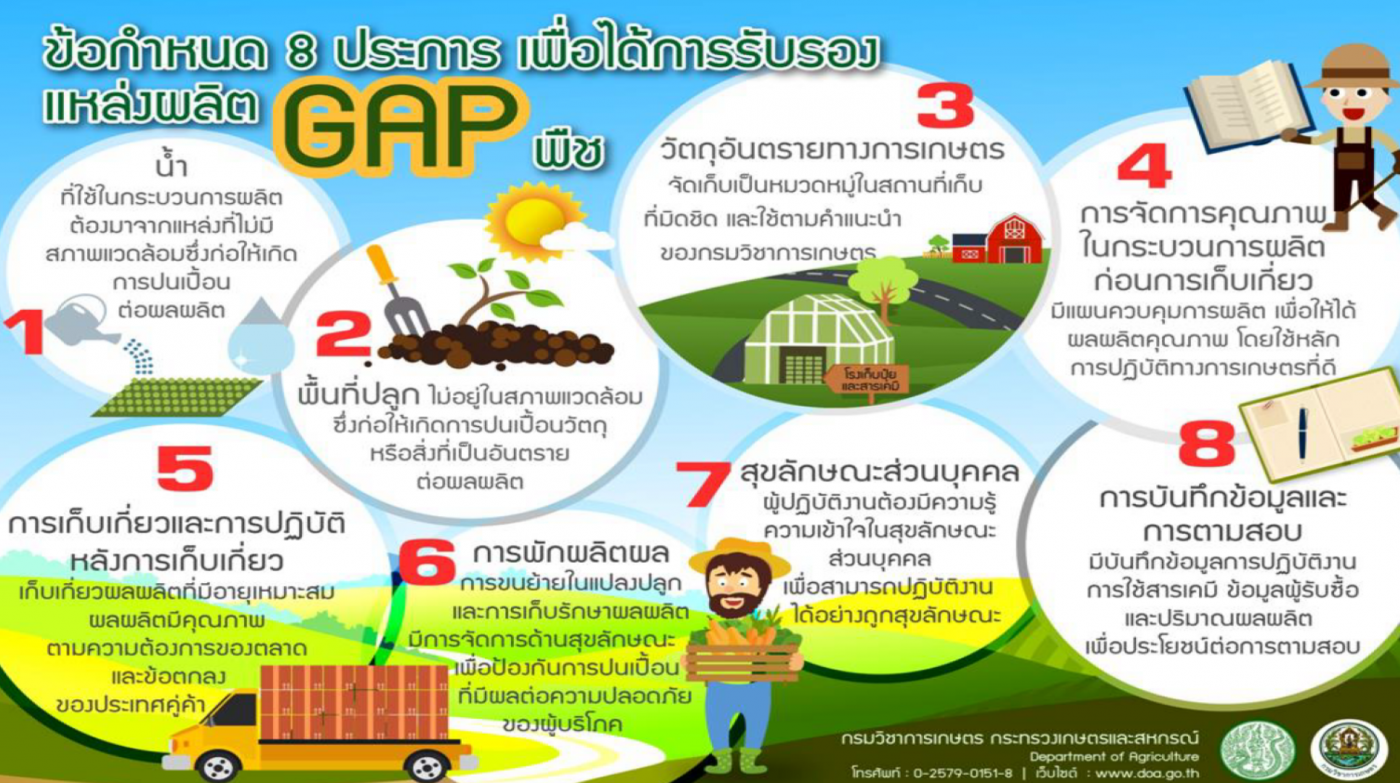
Eight Requirements for Good Agricultural Practices (GAP) Certification for Crop Production Sites

Download: Good Agricultural Practices (GAP) for Crop Production (15 MB PDF)
